John Brennan Crutchley
Dubbed the Vampire Rapist, John Brennan Crutchley was a suspected serial killer who drank the blood of one of his kidnapping victims.
Once revered as “America’s Dad” for his role on “The Cosby Show,” Bill Cosby experienced a dramatic fall from grace when numerous allegations of sexual assault came to light, revealing a dark side to the beloved comedian and actor.
His case has become one of the most high-profile examples of a powerful figure being brought to justice after years of alleged misconduct, reshaping the conversation around sexual assault, consent, and accountability.
Born in 1937, Bill Cosby began his career as a stand-up comedian in the 1960s, quickly gaining popularity for his clean, family-friendly humor.
He made history as the first African American to star in a network television series with “I Spy” in 1965, for which he won three Emmy Awards.
However, it was “The Cosby Show,” which aired from 1984 to 1992, that cemented his status as a cultural icon.
The show, which portrayed an affluent African American family, was praised for its positive representation and became one of the most successful sitcoms in television history.
Off-screen, Cosby was seen as a moral authority, often speaking out on issues of social responsibility, education, and family values.
He received numerous accolades, including the Presidential Medal of Freedom in 2002, and was a sought-after public speaker and author.
Despite his public image, allegations of sexual misconduct against Cosby had circulated for years, but it wasn’t until 2005 that the first public accusations led to a legal case.
Andrea Constand, a former Temple University employee, accused Cosby of drugging and sexually assaulting her at his home in Pennsylvania.
The case was settled out of court in 2006, but the details were kept confidential.
The floodgates opened in 2014 when comedian Hannibal Buress referenced the allegations in a stand-up routine, prompting renewed public interest.
As more women came forward, Cosby was accused by over 60 women of sexual assault, with many alleging that he drugged them before assaulting them.
The stories shared similar patterns, with incidents dating back decades.
In 2015, the previously sealed deposition from the Constand case was released, in which Cosby admitted to obtaining Quaaludes to give to women he wanted to have sex with.
This led to criminal charges being filed against him for the first time in connection with Constand’s allegations.
Cosby’s first trial in 2017 ended in a mistrial due to a deadlocked jury. However, in a retrial in 2018, he was found guilty of three counts of aggravated indecent assault against Constand.
The trial was significant not only for the verdict but also because it was one of the first major cases tried after the #MeToo movement gained momentum, highlighting the issue of sexual assault by powerful men.
Cosby was sentenced to three to ten years in prison, marking a stunning downfall for a man once seen as an icon of family values and respectability.
The conviction was hailed as a victory for the many women who had accused Cosby of assault and for the broader movement seeking justice for survivors of sexual violence.

In June 2021, the Pennsylvania Supreme Court overturned Cosby’s conviction on procedural grounds, ruling that an agreement with a previous prosecutor should have prevented him from being charged.
His release from prison sparked widespread debate, with some seeing it as a miscarriage of justice and others arguing it was a necessary correction of legal overreach.
The legacy of Bill Cosby is now forever tainted by the accusations and his conviction, despite his contributions to television and culture.
His case has had a lasting impact, reinforcing the importance of listening to survivors and holding powerful individuals accountable for their actions.
The story of Bill Cosby serves as a reminder of the complex interplay between fame, power, and the law, and the ongoing struggle for justice in cases of sexual violence.

Dubbed the Vampire Rapist, John Brennan Crutchley was a suspected serial killer who drank the blood of one of his kidnapping victims.

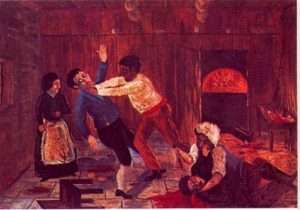
The Red Inn Murders were occurred in France during the 19th century, where the proprietors of an inn killed and cannibalised their clientele.

During the 1990’s and early 2000’s, George “G” Williams carried out a murderous vendetta against Suge Knight and his Death Row Records.

The Nancy Guthrie Kidnapping occurred on February 1, 2026, when the 84-year-old mother of US News anchor Savannah Guthrie vanished.

The unsolved murder of a Swedish prostitute has become known as the Atlas Vampire case, because the killer drank the victims blood.

As the lead singer of Welsh rock band the Lostprophets, Ian Watkins had legions of fans, but few could know he was a prolific child abuser.
Copyright © 2025 The True Crime Database. All Rights Reserved.